
Go Virtual: The Remote Assistant Experience (free 2026 white paper)
A practical guide for small-business owners who want a remote assistant that actually takes work off their plate. It covers what to delegate, how to run the relationship day to day, how to measure it, and how to start, with a brief you can fill before your first interview.
Email me the guide ↓What's inside
- An Emily, not a VA: what separates a trained remote executive from a freelance virtual assistant
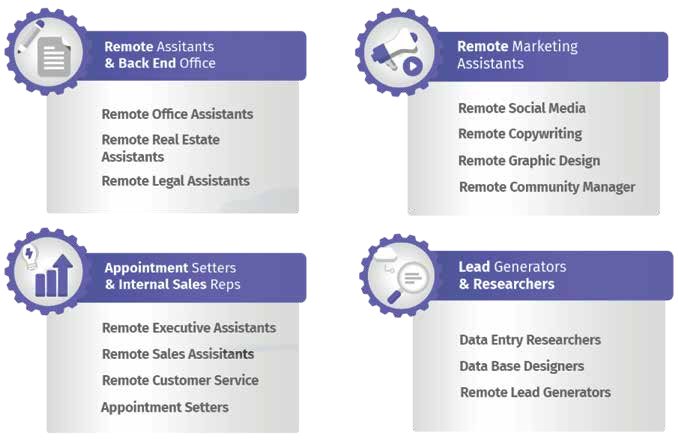
- Six lines, one ladder: the roles a remote assistant can fill, from admin to tech and AI, and what they cost
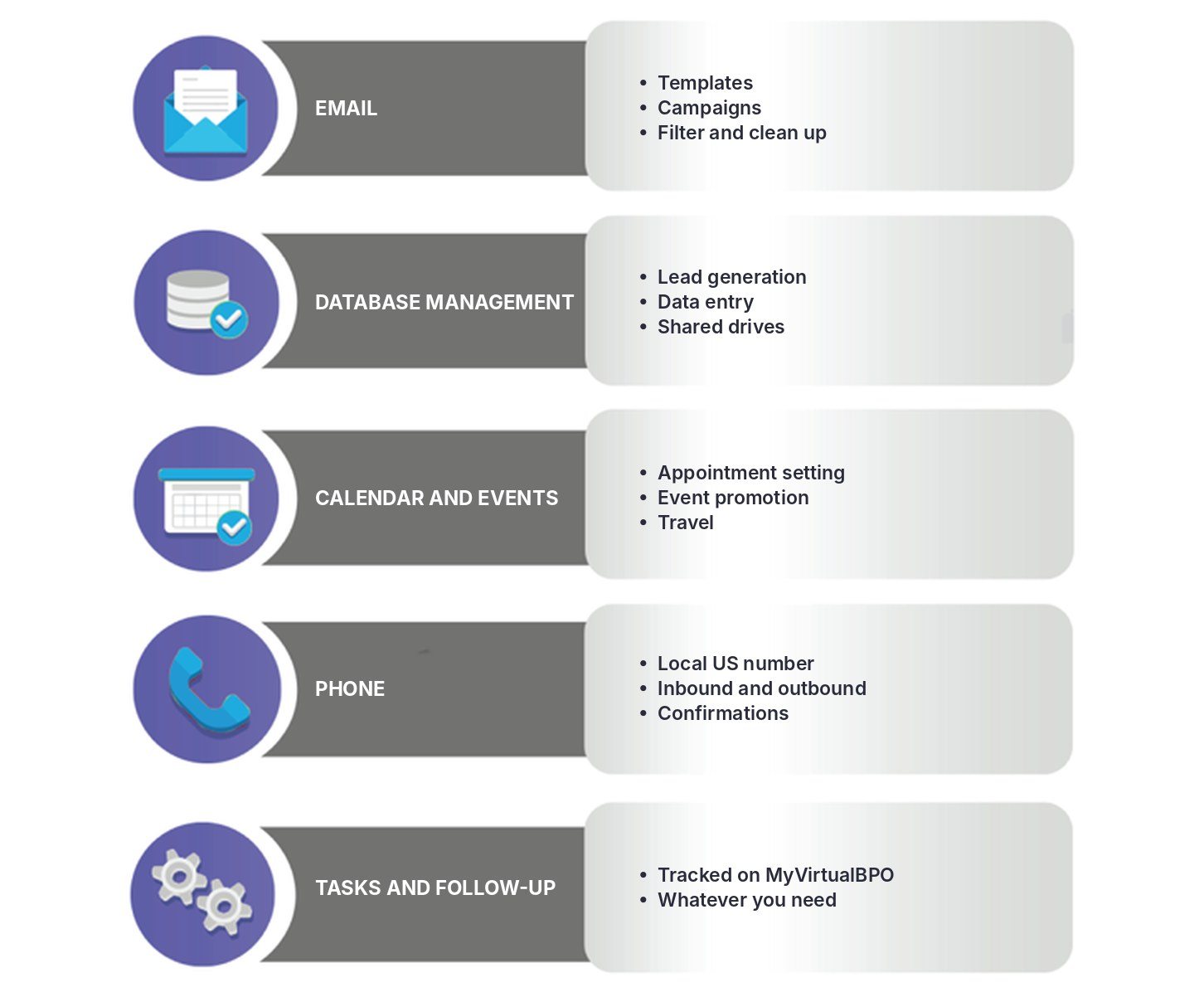
- The Emily menu: email, database, calendar, phone, sales support, finance back office and more
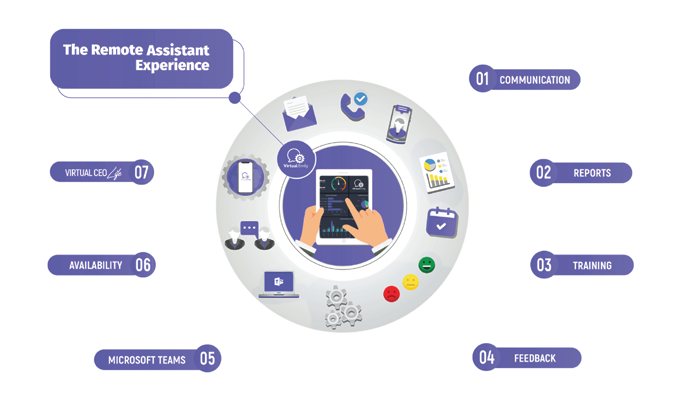
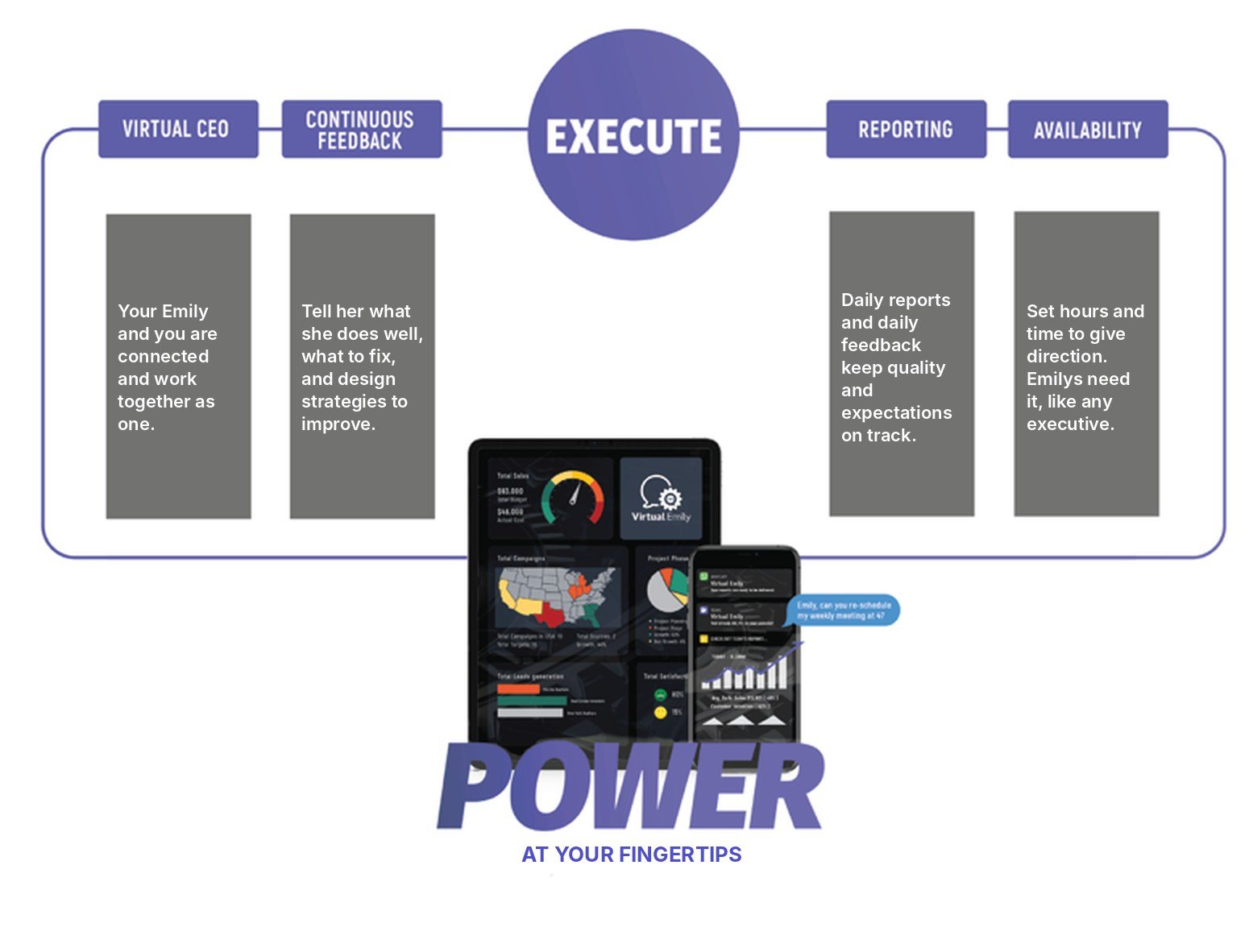
- Seven habits of the Remote Assistant Experience: communication, reports, training, feedback, project management, availability, the VCEO Life
- How to measure your assistant: KPIs by line and the three-line daily report
- The Statement of Work checklist: scope, outcomes, timeline, rhythm, tools and check-ins
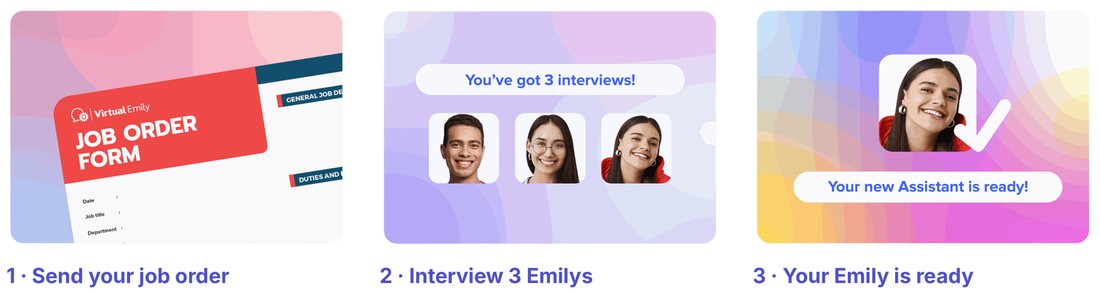
- How to get your Emily in four steps, and your Emily brief

Key takeaways
- Delegate functions with outcomes, not one-off tasks.
- One channel for direction, one tool for the work, and a daily good-morning plan and good-night report.
- Measure two or three KPIs per line on a dashboard you can read in 30 seconds.
- Write a Statement of Work before day one: unclear expectations are the top reason remote hires fail.
Questions owners ask
What is the difference between a virtual assistant and a remote executive?
A virtual assistant is usually a freelancer you recruit, train and manage yourself. A remote executive, an Emily, is vetted, trained, US-contracted, supported by an account manager and measured on live KPIs, with a free unlimited replacement guarantee.
How do I measure a virtual assistant?
Pick two or three KPIs for the role, such as response time or meetings booked, and ask for a daily report with the plan, the numbers and anything blocked. Track it on one dashboard.
What should be in a Statement of Work for a virtual assistant?
Scope, outcomes and KPIs, timeline with checkpoints, reporting rhythm, tools and access, and how check-ins work.
How much does a remote assistant cost?
With Virtual Emily, full-time roles start at $1,500/mo, with MyVirtualBPO included and up to ~70% savings vs. a comparable US in-house hire (varies by role).